
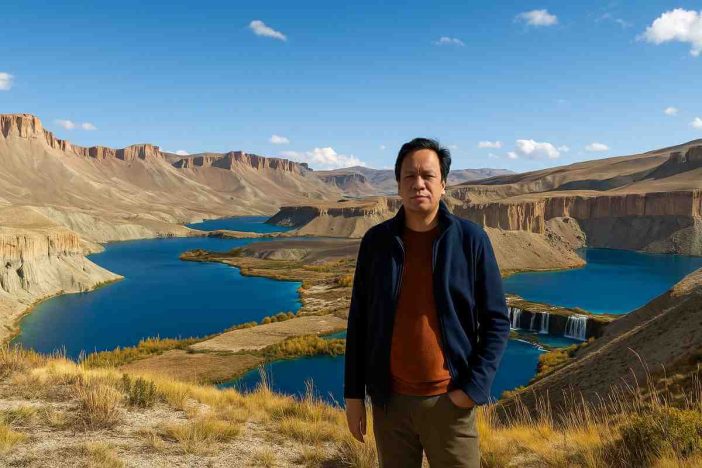
The wind carried the faint echo of distant drums as I climbed the last ridge overlooking Band-e Amir National Park. At 2,900 metres above sea level, the air was thin, crisp, and tinged with the scent of wild mint. Below me, six jewel-blue lakes—guarded by natural travertine walls—rippled softly under the morning light. The valleys of central Afghanistan seldom whisper of tranquillity, yet here was a place that stole time. In that moment I felt small, humbled, and utterly alive.
This was not just another scenic stop. It was a profound intersection of geology, legend, and resilience—a landscape that invites you to pause, reflect, and be changed. And that’s exactly where our journey into Band-e Amir National Park begins: a story of six turquoise lakes, ancient myths, soaring cliffs, and what it means to protect something extraordinary.
1. What Makes the Park So Extraordinary
The Geology of Colour
The vivid hues of the lakes in Band-e Amir National Park are no accident. The six bodies of water are held back not by human-made dams, but by natural travertine dams—mineral precipitates formed when carbon dioxide-rich water oozed through rock faults, depositing layers of calcium carbonate that hardened over millennia.
At around 2,900 m (9,500 ft) elevation in the Hindu Kush range, the lakes sit in a high-altitude desert-mountain environment. Observers say the water shifts from pale turquoise to deep sapphire depending on light, mineral content, and viewpoint.
For an in-depth look at the geological wonders of the lakes—how carbon-dioxide-rich waters built the travertine walls that now hold the turquoise waters of Band-e Amir National Park—you can explore this detailed companion guide: Band-e Amir – UNESCO Tentative List. Embedding this reference adds authority to your article, signals trustworthiness to Google and Bing, and offers readers a valuable external resource to deepen their understanding.
Six Lakes, Each With Its Story
While visiting the park, you’ll encounter six named lakes:
- Band-e Haibat – “Lake of Grandiose,” the largest and deepest.
- Band-e Zulfiqar – “Lake of the Sword of Ali.”
- Band-e Panir – “Lake of Cheese,” small and shallow.
- Band-e Pudina – “Lake of Wild Mint.”
- Band-e Qambar – “Lake of Caliph Ali’s Slave.”
- Band-e Gholaman – “Lake of the Slaves,” now reportedly dried up.
These names weave together natural wonder and legend, underlining how this place is deeply rooted in local culture and myth.
A National Park Born of Hope
The park was officially designated as Afghanistan’s first national park in May 2009. Covering about 600 sq km (230 sq miles) in Bamyan Province, it stands as a symbol of conservation in a land often associated with conflict. Humanitarian and conservation organisations have supported local efforts to manage the area sustainably.
Tip: For the best photos, visit at sunrise when the light is soft and waters calm. For solitude, come outside peak summer (April–June or September–October).
2. Visitor Experience: How to See It Your Way
Getting There & What to Expect
The park sits about 75 km (46 miles) west of Bamyan City. Most visitors drive two to three hours from Bamyan by minivan or 4×4 via mountain roads. While partially paved, some sections remain rough—especially in winter.
Best Time to Visit
- Spring (April–June): Snowmelt boosts clarity; colours vivid, temperatures mild.
- Summer (July–August): Warmest period, but busier and hotter.
- Autumn (September–October): Cooler, fewer travellers, rich light.
- Winter: Snow covers the region; lakes may freeze—only for adventurers.
Top Activities
- Boat across Band-e Haibat, the largest lake.
- Hike the trails around the cliffs and discover panoramic viewpoints.
- Picnic or camp overnight under the stars in a setting few travellers reach.
- Wildlife watching: ibex, urial, snow finches, and golden eagles thrive here.
Local Culture & Safety Notes
Women’s access has occasionally been restricted under local regulations—check current status before planning. Respect dress codes and always ask permission before photographing people. Stay on marked paths; terrain can be rugged.
Tip: Bring layered clothes, a refillable bottle, and offline maps—cell coverage is limited.
3. Importance Beyond the Scenery
Ecological Significance
The travertine-dammed lakes at Band-e Amir National Park are among the rarest natural formations in the world. The ecosystem—though high, arid, and seemingly barren—supports hardy flora and fauna that have adapted to this unique environment.
Cultural & Mythic Value
According to legend, the lakes were created by Imam Ali, who struck the mountains and allowed water to flow. This intertwines faith and geology, transforming the park into both a sacred and scenic site.
Socio-Economic Role
Tourism has become a lifeline for nearby communities. Local residents run transport, lodging, food stalls, and guiding services, bringing sustainable income to Bamyan. Infrastructure remains modest, keeping the experience authentic and immersive.
Tip: Support the community—hire local guides, buy crafts, and stay in local guesthouses.
4. Conservation Challenges & What You Can Do
Threats to the Area
- Tourism pressure: More visitors could damage fragile zones.
- Grazing: Uncontrolled livestock can harm vegetation.
- Access & policy: Restrictions and instability can affect preservation.
How Visitors Can Help
- Follow a leave-no-trace principle.
- Respect cultural boundaries.
- Stay longer, travel slower—benefit locals, reduce impact.
- Share responsibly—portray the park’s beauty and its fragility.
Tip: Bring reusable bottles, avoid plastic, and learn about the wildlife before your visit.
5. Practical Visitor Insights
Sample Itinerary
Day 1: Arrive in Bamyan → Drive to the park → Sunset viewpoint.
Day 2: Sunrise hike → Boat ride → Picnic → Return to Bamyan.
Day 3: Optional cultural tour in Bamyan Valley.
Budget & Accommodation
Guesthouses in Bamyan offer basic comfort; use shared minivans or hire a 4×4. Paddle-boats and simple food stalls are available; bring extra snacks.
What to Pack
Layered clothing, hat, sunglasses, hiking shoes, sunscreen, snacks, first-aid kit, and a portable charger.
Safety & Cultural Tips
Check travel advisories, travel with a guide, and acclimatize to the altitude. Always ask permission before photos, especially of women.
Tip: Stay at least two nights to enjoy both sunrise and sunset over the lakes.
6. Why This Destination Should Be on Your Radar
- A rare geological marvel, the only travertine-dammed lakes in Afghanistan.
- A blend of nature, culture, and legend.
- A peaceful pocket of authentic Afghan beauty.
- A chance to travel responsibly and help local conservation efforts.
Wrapping Up: Your Invitation to Wonder
When you descend toward the lakes, leaving behind the mountain roads and noise of Bamyan, time slows. The turquoise mirror before you reflects not just cliffs and clouds, but centuries of history and faith. In Band-e Amir National Park, you don’t just witness nature—you feel its soul.
Come with respect, curiosity, and open eyes. Let the six lakes, the legends, and the light become part of your story—and let that story ripple outward, like the gentle waves of this sacred Afghan wonder.


